
Key Pillars of Digital Marketing
- Search Engine Optimization (SEO): The process of optimizing a website so it ranks higher on search engines like Google, driving organic (free) traffic to your business.
- Social Media Marketing (SMM): Using platforms like Instagram, Facebook, LinkedIn, YouTube, and X (Twitter) to build a brand, interact with followers, and drive traffic or sales.
- Content Marketing: Creating and sharing valuable content (like blogs, videos, podcasts, and infographics) to attract and engage a targeted audience.
- Pay-Per-Click Advertising (PPC): Paid online advertising where you pay a fee each time someone clicks on your ad (e.g., Google Ads, Meta Ads).
- Email Marketing: Sending direct messages, newsletters, and promotional offers to a targeted list of subscribers to convert them into loyal customers.
- Affiliate Marketing: Partnering with individuals or other companies who promote your product in exchange for a commission on sales.
Why is Digital Marketing Important?
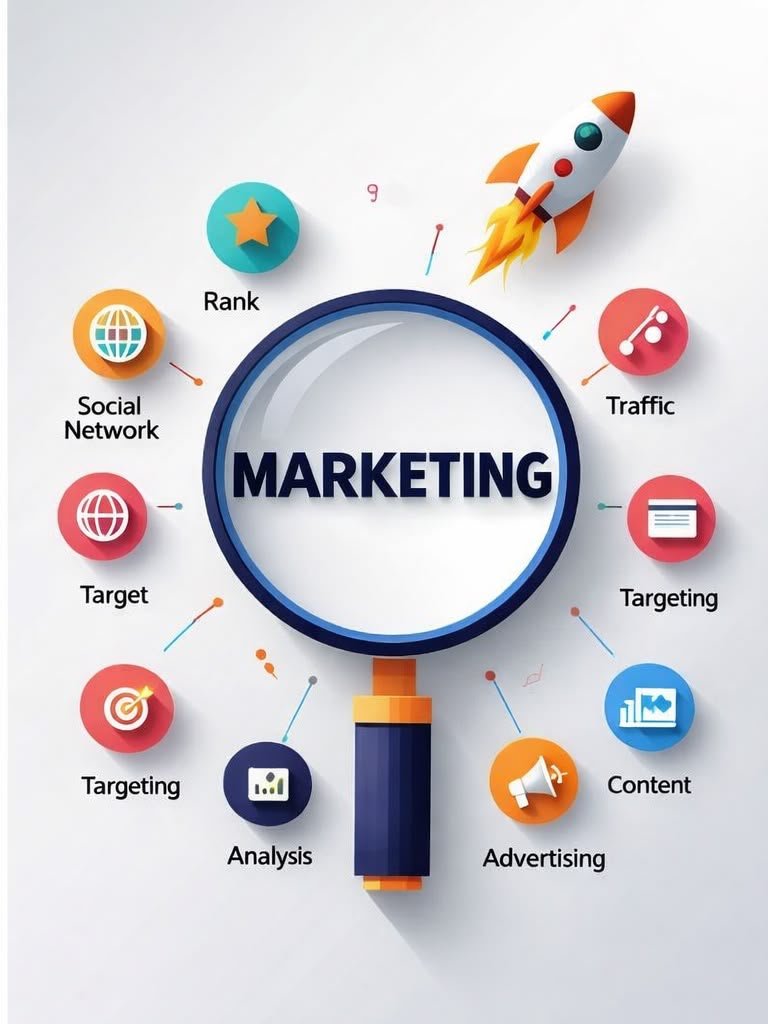
- Global Reach: Enables businesses to reach audiences anywhere in the world, breaking geographical limits.
- Cost-Effective: Often much cheaper than traditional media ads, making it accessible for startups and small businesses.
- Measurable Results: Tools like Google Analytics allow you to track impressions, clicks, traffic, conversions, and exact Return on Investment (ROI) in real time.
- Targeted Advertising: Lets you show ads to specific demographics based on age, location, interests, purchasing habits, and online behaviors.
Which specific area of digital marketing (e.g., SEO, social media, or running paid ads) would you like to explore further?
The key benefits of digital marketing are as follows:
1. Cost-Effective
It is much cheaper than traditional advertising methods like newspapers, TV, or billboards. This makes it ideal for small businesses and startups with limited budgets.
2. Targeted Advertising
You can display your ads specifically to people who are most likely to buy your product or service. You can target audiences based on age, gender, location, interests, and online behavior.
3. Measurable Results
Unlike traditional marketing, you can track performance in real time using tools like Google Analytics or Meta Ads Manager. You can see exact metrics for views, clicks, leads, sales, and Return on Investment (ROI).
4. Global Reach
Even a small local business can use a website or social media to reach customers anywhere across the globe, overcoming physical boundaries.
5. Direct Customer Engagement
Social media allows you to interact directly with your audience through comments, direct messages, and reviews. This helps build trust and stronger customer relationships.
6. Flexibility & Adaptability
If an ad campaign is not performing well, you can pause, adjust, or change your strategy immediately without losing a large amount of money.
Would you like to focus on a specific aspect, such as learning a particular skill or applying digital marketing to a business?